What can I do? Donations and volunteering in India
My story and thoughts

I myself came to India through a year of volunteering with a non-profit organisation in Delhi.

Fresh after graduating from high school as a 19-year-old, this year was an incisive experience and a very instructive but also enriching time for me.

India is a beautiful country with wonderful people. But despite the emerging country’s increasing progress, poverty in India is on every street corner.
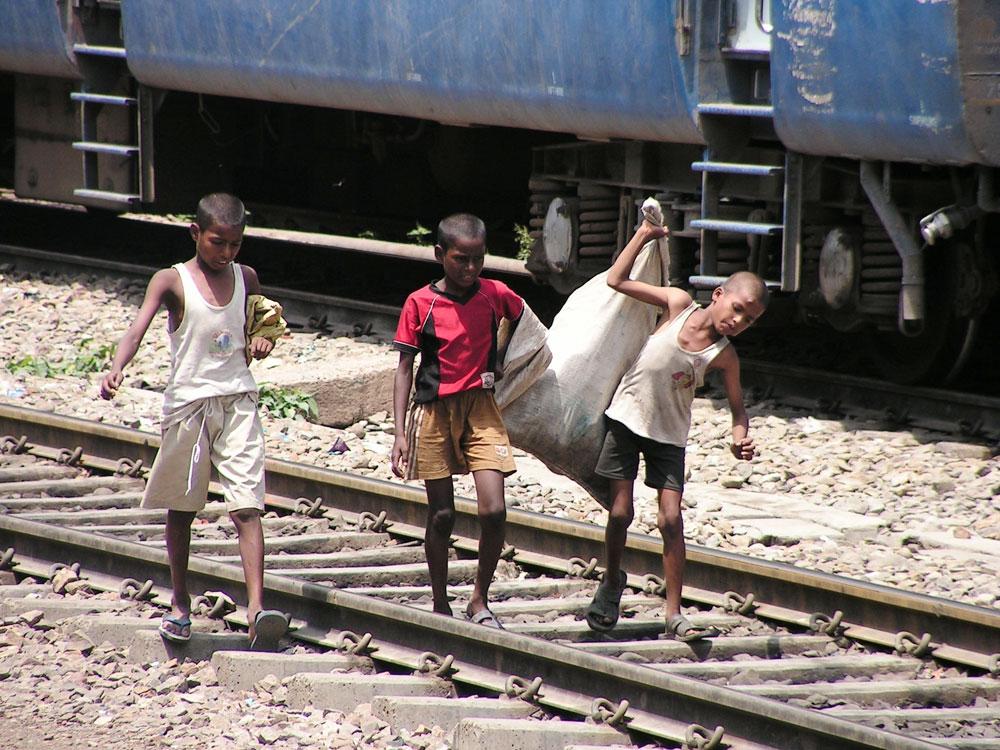
Begging women with their babies, cripples crawling through trains in rags, children working in restaurants, sparsely cobbled together tent shelters that serve as dwellings. This, too, is India.

And it is precisely where there is money that the poorest of the poor are drawn. Tourists mean money and so it is inevitable that travelers will encounter not only beautiful impressions, but also suffering and poverty during their trip to India.
But what do you do then? You want to help. After all, you are here as a guest in the country and you have a lot more money at your disposal than the average Indian.
But what is right or the best?

I often ask myself these questions of my guests. Are there beggars? Should you bring pens and sweets for the children? Can I volunteer somewhere? Are there any social institutions to which donations can be made?
My answer: you often do more harm if you support the system of organised begging. As long as the system works, children will continue to be sent to the streets instead of school. The same applies to women.

However, it makes perfect sense to keep a few rupees in coins ready for elderly or severely disabled beggars. For this group of people, daily begging is often the only way to survive.
Also the bringing of pens and sweets in the tourist areas has led to a strong demand for gifts from tourists, which can often be unpleasant.
However, if you visit social institutions, visit someone or have a very special relationship with a family, but small souvenirs like sweets are a nice attention.
Otherwise, I recommend targeted donations to well-functioning charitable organizations as targeted support for India and its poorer sections of the population.

If you don’t have money, but have time and work, as well as looking for a cultural exchange, I recommend volunteering. However, it should be noted here that volunteering only makes sense if you have a longer period of time and you can really get involved. Short volunteer stays of less than one month are usually only a great logistical effort, cost money and, above all, hardly bring anything to the needy, as they need time to get used to reference persons.
Chalo! Reisen works with the non-profit organization Tabaar in Jaipur and Human Hope Foundation in Shimla.
Tabaar Organization in Jaipur
Here is a coherent, web-ready presentation of the TAABAR organization with all topics (organization, projects, girls’ education, sponsorship and volunteering). The structure is designed in such a way that it can be transferred directly to a website – with clear sections and appropriate image areas.
TAABAR SOCIETY
Training Awareness and Behavior Change about Health and Rehabilitation Society
The TAABAR Society is a non-profit organization in Jaipur (Rajasthan, India) that is committed to the protection, education and rehabilitation of children in difficult life situations.
Since its foundation in 2006, TAABAR has primarily supported:
- Street children
- Child laborers
- Missing and runaway children
- Children from extremely poor families
- Girls with limited access to education
The organization offers protection, education, psychosocial support and long-term prospects to enable children to lead a safe and self-determined life.
Formation of the organization
The initiative was launched in 2006 to support children living around the Jaipur railroad station.
Many of these children were:
- ran away from home
- Victims of violence or neglect
- have been forced to work
- or had lost their families.
Initially, the team rented a small apartment in which five children were accommodated. Due to limited resources, it was initially only possible to provide meals, childcare and some educational programs.
However, as there were no places to stay overnight, many children had to return to the station at night – where they were exposed to dangers such as drugs, exploitation, prostitution or human trafficking.
After discussions with the city administration, the Jaipur Municipal Corporation finally provided a hall near the train station.
This is how the Bal Basera Open Shelter Home was created – a safe haven for children in need.
Goals of the TAABAR organization
The most important goals of the organization are
- Protection and care for children in difficult life situations
- Promotion and defense of children’s rights
- Reintegration of children into families or society
- Raising public awareness of children’s rights
- Cooperation with government agencies and NGOs
- Rehabilitation and support for particularly vulnerable children
- Promoting education and long-term life prospects
Bal Basera – Open shelter for street children

The Bal Basera Open Shelter Home offers immediate protection and support to children living on the streets or in danger.
A total of 4,761 children were admitted between 2006 and 2022.
Results of the work:
- 3,290 children were successfully reunited with their families
- 1,461 children were placed in long-term care or other facilities
- Around 50 children currently live in the shelter
The children receive:
- Secure accommodation
- healthy nutrition
- Medical care
- Education and learning support
- Leisure and sports programs
- creative activities such as music, theater and art
- Psychosocial support
Children’s home for long-term care
TAABAR has been running a long-term children’s home since 2015, where children up to the age of 18 are cared for.
Children live there:
- whose parents are in prison
- who no longer have a family
- whose parents are ill or unemployed
- who come from extremely poor families
There are currently 21 children living in this facility.

The children receive:
- Nutrition and medical care
- School education and learning support
- creative activities
- Vocational training courses
- Art- and theater-based therapy
- Excursions and cultural activities
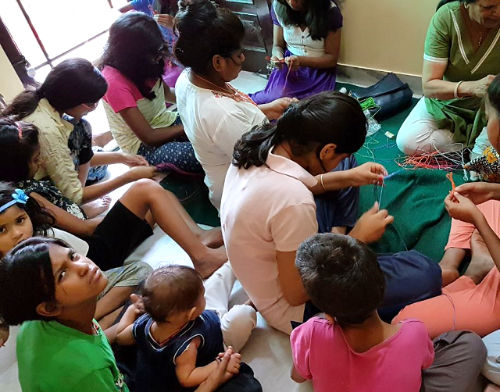
Theater project – TAABAR Rangmanch
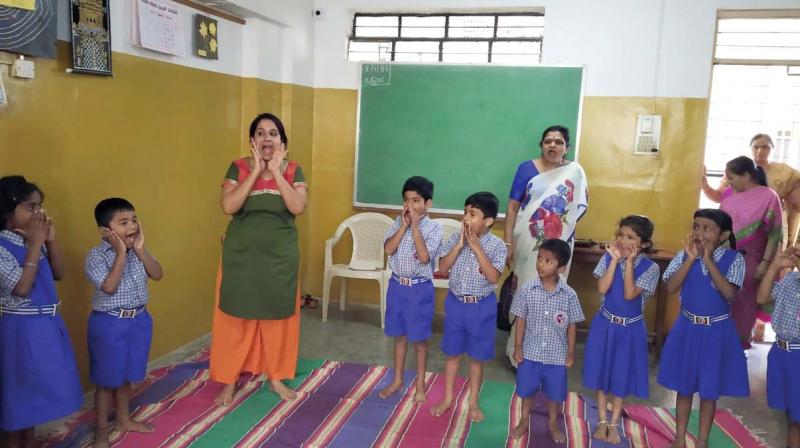
One of TAABAR’s special projects is TAABAR Rangmanch, a theater program for children.
Theater is used as a therapeutic and educational tool and helps the children:
- Build self-confidence
- express their feelings
- process traumatic experiences
- Develop communication skills
- integrate better into society
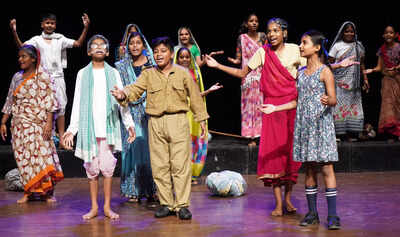
Many children have already been able to showcase their talents in public performances.
Education for girls – Sneh Girls Shikshan Sansthan
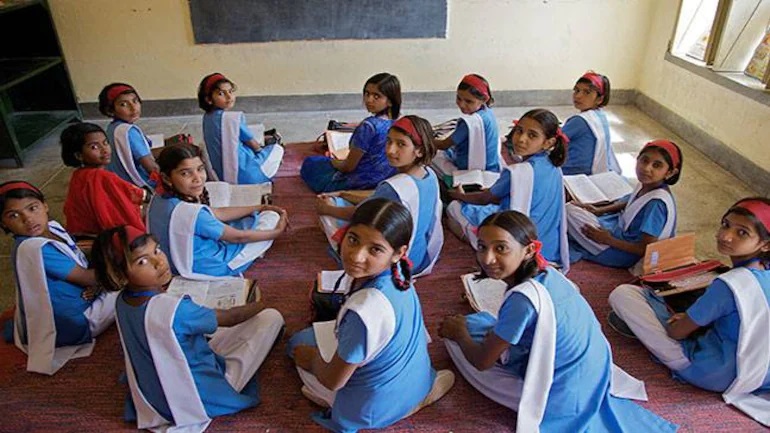
The Sneh Girls Shikshan Sansthan (SGSS) was founded to give girls from poor families access to education.
The school is located in the Luniyawas area, a rapidly growing settlement on the outskirts of Jaipur.
Many families there live in difficult conditions:
- Day laborers and workers
- Very low income
- Low education
- Traditional role models for girls
Since its foundation in 2010, over 200 girls have attended the school.
The school offers:
- free lessons
- Education in English
- safe learning environment
- Promoting self-confidence and future prospects
Sponsorship for a girl

With a sponsorship of 185 € per year you can support the education of a girl at Sneh Girls Shikshan Sansthan.
The sponsorship covers the child’s important needs for an entire school year.
Your support enables
- healthy and nutritious meals
- School materials and learning materials
- Satchel
- School uniform, shoes and socks
- Textbooks for the school year
- Hygiene articles
- Additional educational and support programs
Education gives girls self-confidence, future prospects and protection from child labor or early marriage.
Transparency for sponsors
Sponsors receive regular insights into the development of the child they support.
These include:
- Quarterly progress reports
- Updates on education and well-being
- Photos and activities from everyday school life
- an annual impact report
- Possibility to send messages to the child via the organization
Volunteering at TAABAR
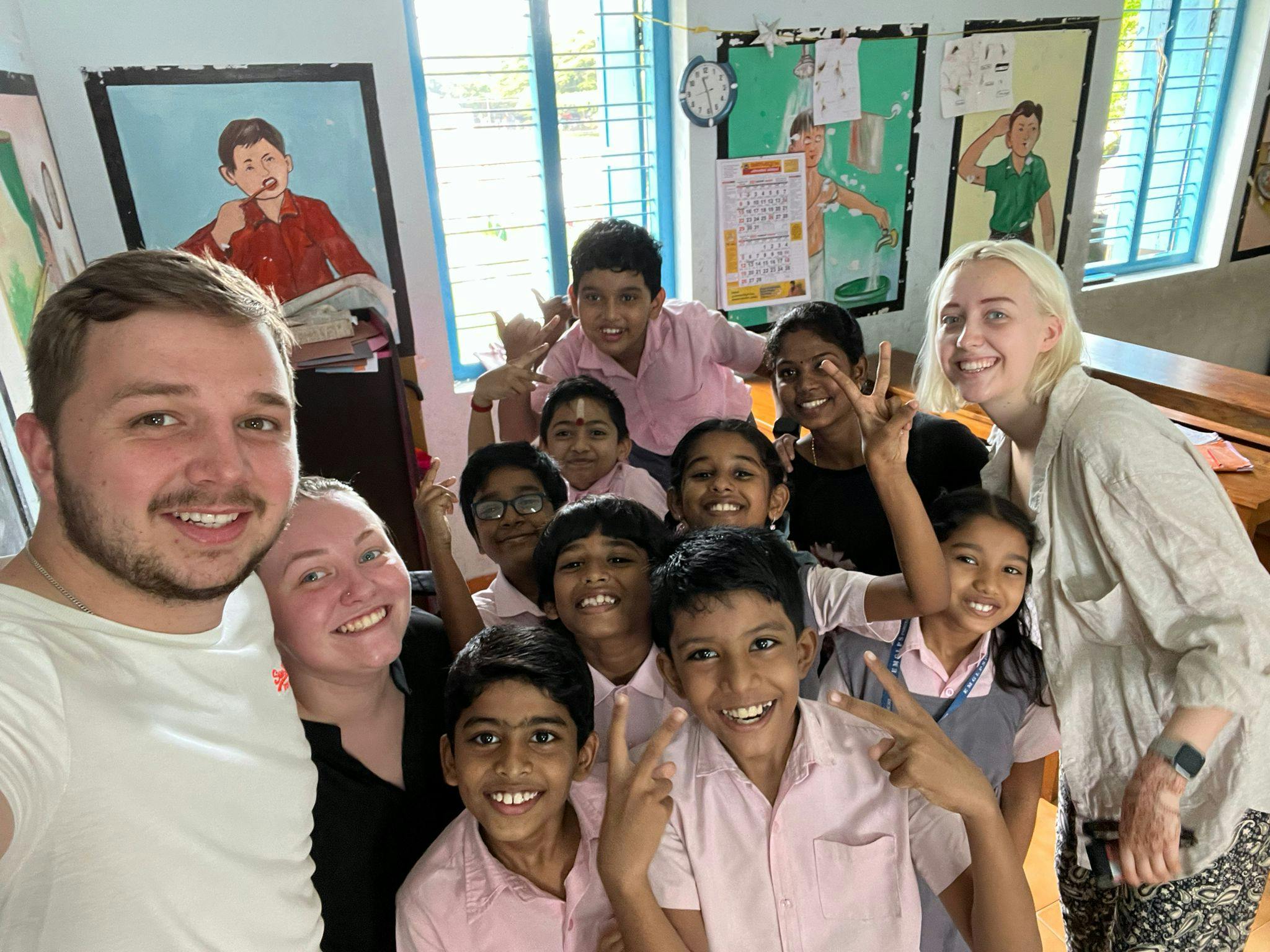
TAABAR also offers volunteer opportunities.
Interested parties can participate in various projects of the organization on a short-term or long-term basis.
Possible applications:
- Care of children in the Bal Basera Shelter Home
- Support for educational programs
- Collaboration in the TAABAR Rangmanch theater project
- Creative workshops (art, music, sport)
- Support for the SGSS girls’ education project
- Leisure and learning programs for children
Volunteers from India and abroad are welcome and can make a valuable contribution to the development of the children.
If you are interested in sponsoring or volunteering in one of the Tabaar projects, please get in touch with us.
Human Hope Foundation in Shimla

I am very happy to have found a small non-profit organization in my Indian “hometown” Shimla for Diwali 2019.
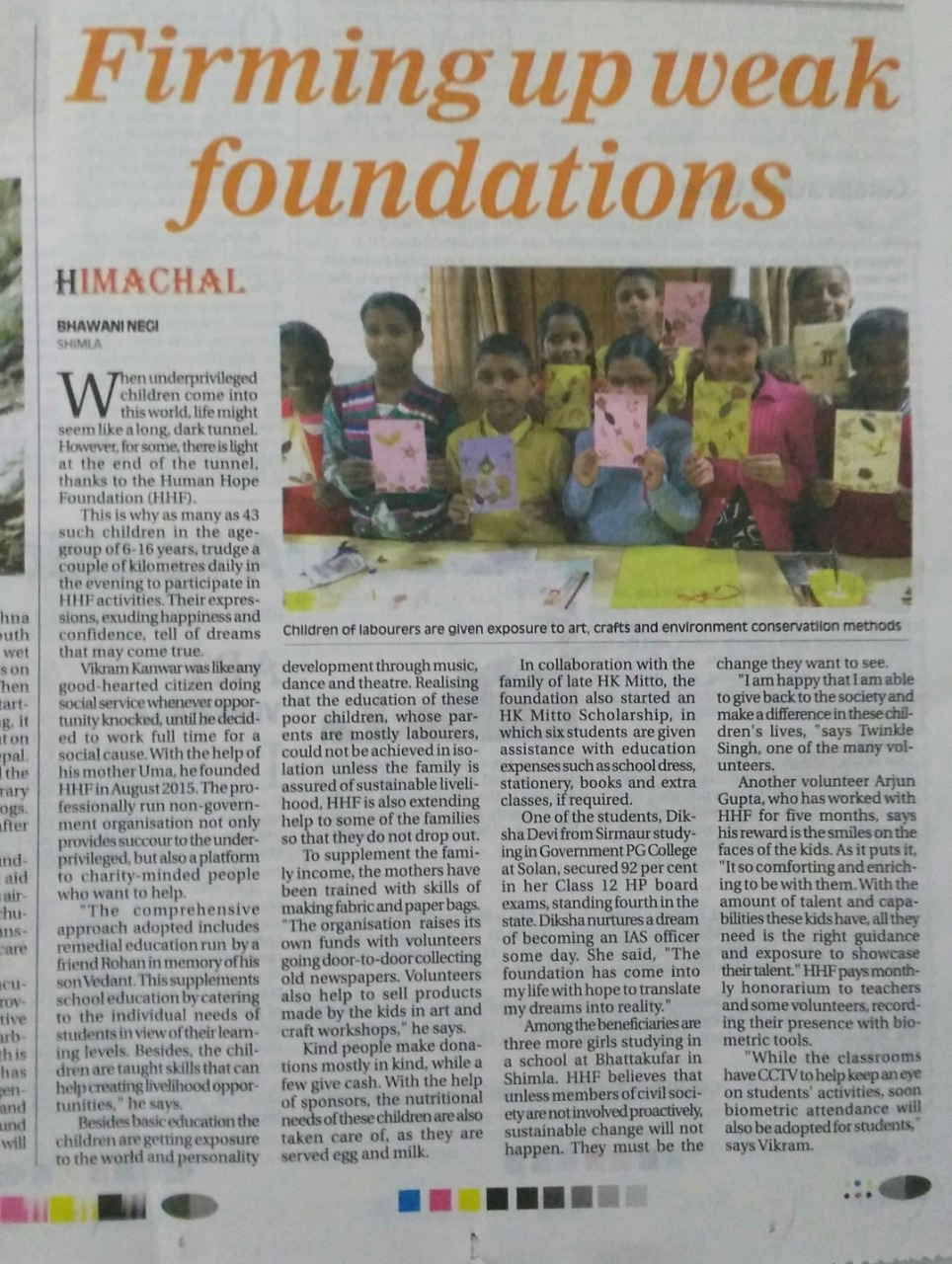
The Human Hope Foundation consists of thirty supported school children, six girls with a scholarship, a handful of volunteers, five dedicated teachers and an impressive founder.
Vikram Kanwar founded the small NGO in 2014. The aim of the NGO is to provide children from the families of the disadvantaged sections of society with a good education in order to enable their future chances for a better life. The current 28 children between the ages of 5 and 16 come mainly from families who have moved in from the poor Indian states of Bihar, Uttar Pradesh and Rajasthan to do simple wage work here in Shimla.

Every day from 15:30 to 18:00, tutoring is given to the children so that they do not miss the connection at school, as their parents, who have never gone to school themselves, cannot help them, nor have the time to do so, or even the money to finance tutoring.
It starts with a fruit meal to fill the children’s bellies. Then begins teaching mathematics, English, Hindi, science and computer science.

As often as possible, there is also a small snack at the end of the lesson. “This motivates the children to actually come here,” says Vikram.
Another reason to get the children into this safe environment for the two to three hours in the afternoon is to get them away from street dangers, such as drugs, child labour, etc.

Workshops are held on weekends. Dance, music, chess and also a candle workshop have already taken place. Some of the candles were subsequently sold by the volunteers outside Diwali at stalls in Shimla.
I myself became aware of the NGO through my “bicycle” friend Gandharav. He himself studies medicine and conducts health checks of the children with his student colleagues.

Another project of the organization is to support especially talented girls in their education.
6 girls receive an annual scholarship, which sponsors tutoring, school uniform and school supplies.
How to help:
- Donate material and equipment. The NGO is happy about games, computers, tables, benches, books, wall panels, etc.
- Dresses for the children
- Money to pay the teachers and professional staff, food, materials, clothing for the children, parties (preferably via my German account, this saves fees, receipts can be issued).
- Volunteering: You travel through India, have a special ability and feel like sharing it with the children for a few days or weeks in Shimla. Imagine your project and then we try to integrate it into our plans. We will help you with temporary accommodation in Shimla and logistics.
- Sponsorship for a schoolgirl: Cover the cost of a school year for a talented girl for €100 a year. This covers school fees, material costs and school uniform. As a thank you you get letters and pictures of your protégé and you are welcome to write to her.